After many years of hard work, partnership and detailed planning, work to build fifteen low‑cost homes for young people working in Dorchester has now started.
The Roman Corner project will transform the under-used former tennis court site at West Walks into energy‑efficient, one‑bedroom flats that will be let for low‑cost “social rent”.
The homes will be managed by Aster and prioritised for local people aged up to 35 who are on the housing register and working in the town.
Roman Corner is led by Dorchester Area Community Land Trust, a volunteer‑run, not‑for‑profit organisation, with support from Dorchester Town Council. Community land trusts create housing that stays lower cost for future generations by keeping the homes in community ownership.
The project has been several years in development, beginning in 2017 when Dorchester Town Council first proposed bringing the long‑unused site back into community use.
Tricia Mitchell, Chair of Dorchester Area Community Land Trust, said the lack of affordable/social rental housing, was one of the biggest problems in the country.
“28% of Dorchester's population is over 65, many of whom will soon need professional carers. There needs to be affordable housing for the carers and other young people on low wages. Other groups cannot afford to rent or buy at Dorchester prices. Many still live with their parents in tense households, with inheritance being the only hope of owning a home.
“Roman Corner is a tiny step to helping younger people into housing they can afford. DACLT needs land in Dorchester and adjacent parishes to carry on our work We need younger, vibrant volunteer directors to carry on our work."
The land trust has praised the contribution of Dorset Council, Dorchester Town Council, Homes England and Middlemarch Community‑Led Housing.
Cllr Gill Taylor, Dorset Council’s Cabinet Member for Health and Housing, said: “Dorchester urgently needs more homes that our residents can afford to live in, especially for younger people who want to stay and work locally.”
“This has been a long journey for all involved, and we want to recognise the huge amount of hard work, persistence and community commitment that has brought Roman Corner to this point.”
Their support, funding and technical guidance helped keep the project moving through planning, heritage, legal and environmental requirements. Aster has now joined AJC as the delivery partners and will oversee the build and long‑term management of the homes.
Before construction began, AC Archaeology carried out investigations because the site sits on the edge of the Roman town. The work revealed part of a larger area of historic quarrying that had been used for rubbish disposal over a long period.
The team recovered material that helps show how the area was used in the Roman and later periods. This included large quantities of pottery and ceramic building material, fragments of bottle glass, as well as animal bone and shell.
Archaeologists also found iron and copper alloy objects, coins and small personal items such as a buckle and strap fitting. These items will now be assessed and recorded as part of the site’s archaeological archive.
Construction is expected to be completed next summer (2027).
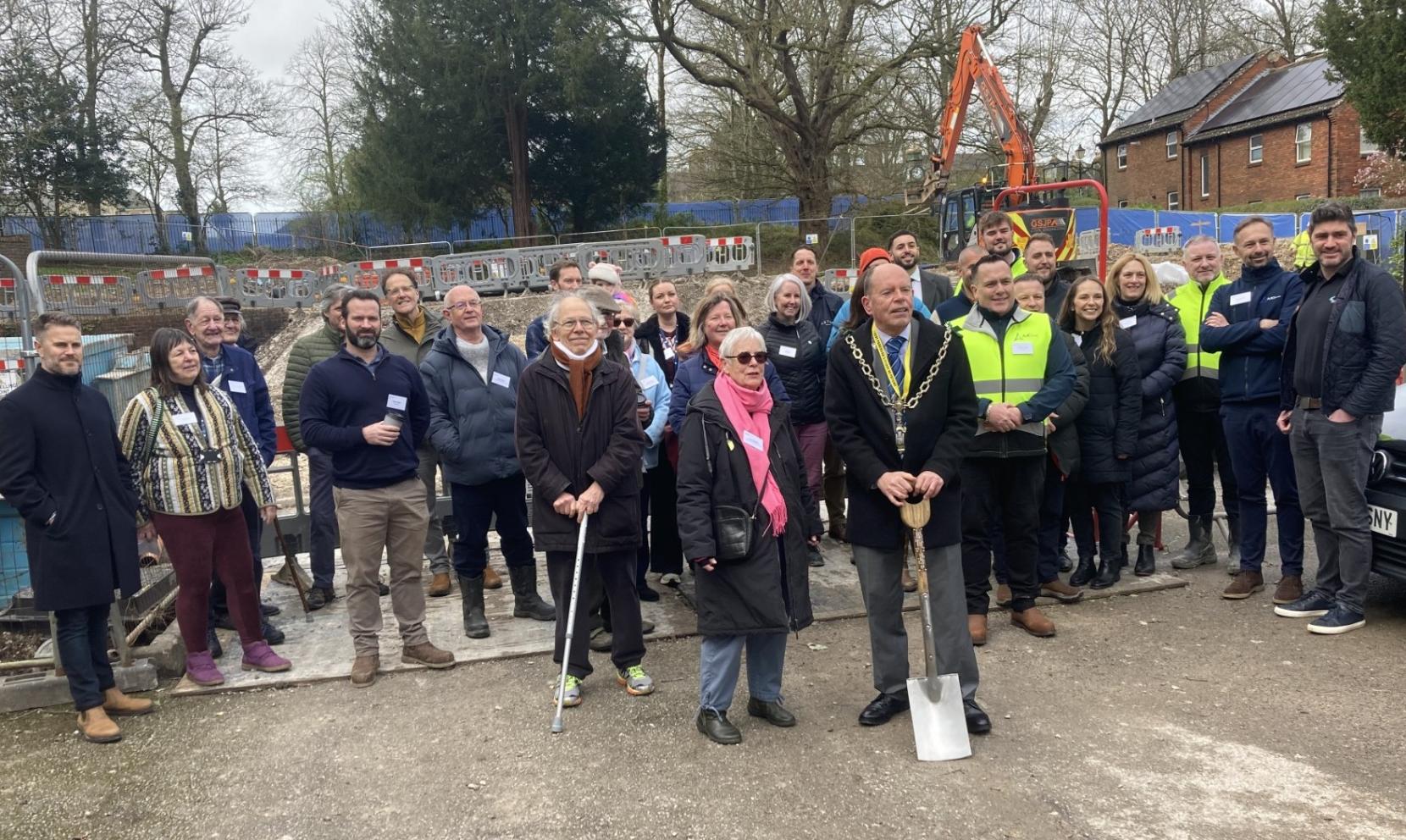
To mark the start of construction, partners held a ceremony at the former tennis courts last week.
Ends

Comments
0 Comments